XXI — When parliament cannot pass the budget
Chapitre XXI
WHEN PARLIAMENT CANNOT PASS THE BUDGET
It may happen that Parliament is unable to pass a budget. Either because too many seats are empty (massive white vote), or because no majority emerges. This is a budget deadlock.
This deadlock must not paralyze the country, but it must have a cost—otherwise it would become a sabotage weapon without consequences. Here are the rules:
21.1 — Previous Budget Renewed with Penalty
The previous budget is renewed WITHOUT inflation indexing and with -10% per year. Sovereign services gradually deteriorate. The deadlock hurts.
21.2 — Taxes Frozen in Real Terms
Taxes remain unchanged in real terms. If the country has an automatic indexing system (like the Belgian index), tax brackets follow the index—otherwise taxpayers would be penalized by “bracket creep.” But no modification of rates or structure is possible without a passed budget. The difference between revenues and expenses feeds a “catch-up fund,” distinct from the structural reserve fund. The money is there, but frozen.
21.3 — Automatic Elections After 12 Months
After 12 months of deadlock, automatic new elections. No limit on the number of cycles. If deadlock persists: elections → deadlock → budget -10% → 12 months → elections → etc.
21.4 — Exiting the Deadlock
Upon exiting the deadlock, the new parliament can use the catch-up fund to repair damage (deteriorated infrastructure, deferred maintenance). The money is earmarked, not merged into the general budget.
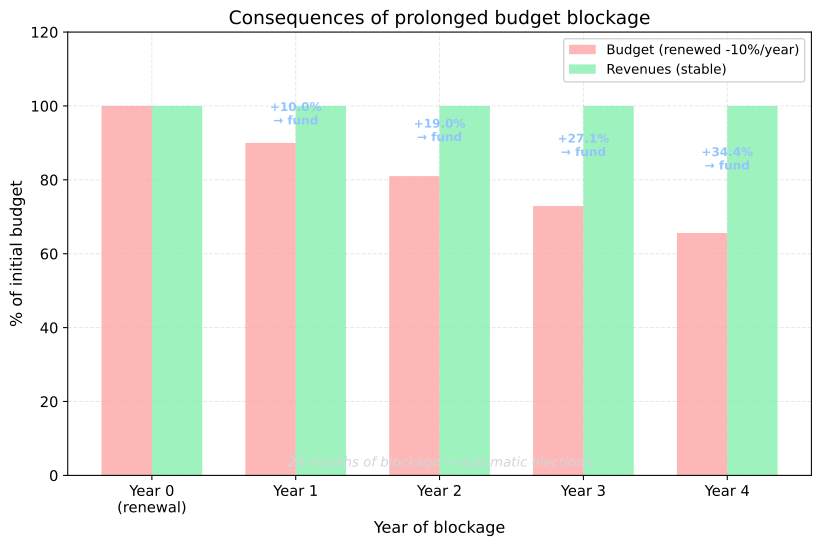
The effect: nobody wins by blocking. The saboteur destroys services their own voters need. The cartel hoping to wait out the deadlock watches its budget melt. Everyone has an interest in breaking the impasse.